I dislike the word “renovation”.
As someone who loves older architecture and places that tell stories, for me the word renovation has the connotation of replacing old with new, and I find that this replacement can often be done to the detriment of a home’s heritage and story. I see so many homes renovated without consideration of history or provenance, and as a result, the new additions or changes feel out of place, overly shiny and date quickly.
When looking for our home in the suburbs, I intentionally sought one out that had only been minorly tampered with. I kept my eyes peeled for original doors, windows and layout.
I also hoped for one with a dated kitchen and bathroom so that I had good enough reason to remove them in time. My vision has always been to restore a home, not renovate it.
A year ago now, we collected the keys to our 20s/30s era Queenslander and upon collecting the keys it became obvious the kitchen’s state was far worse than I had realised, so we quickly began to plan a new one.
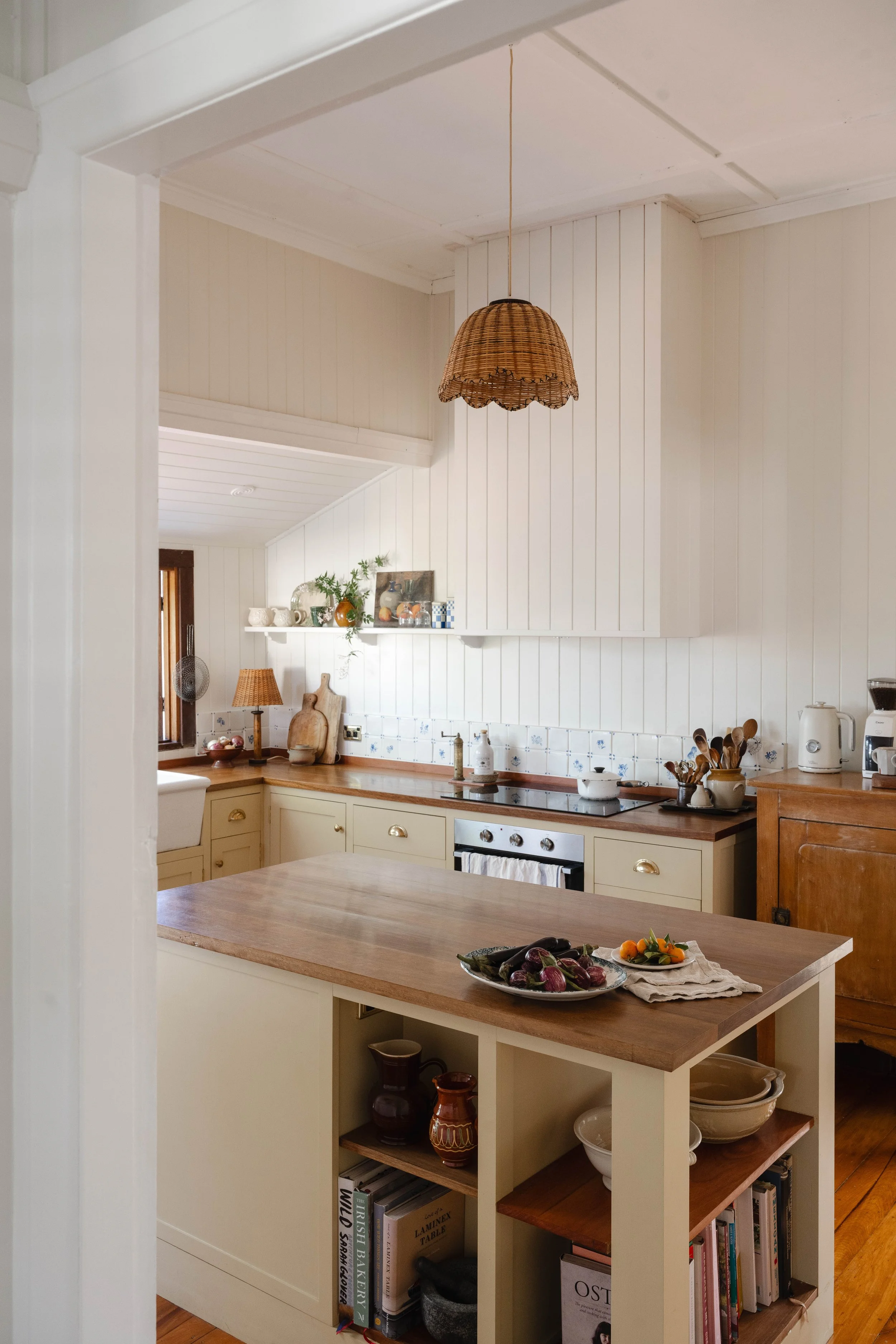
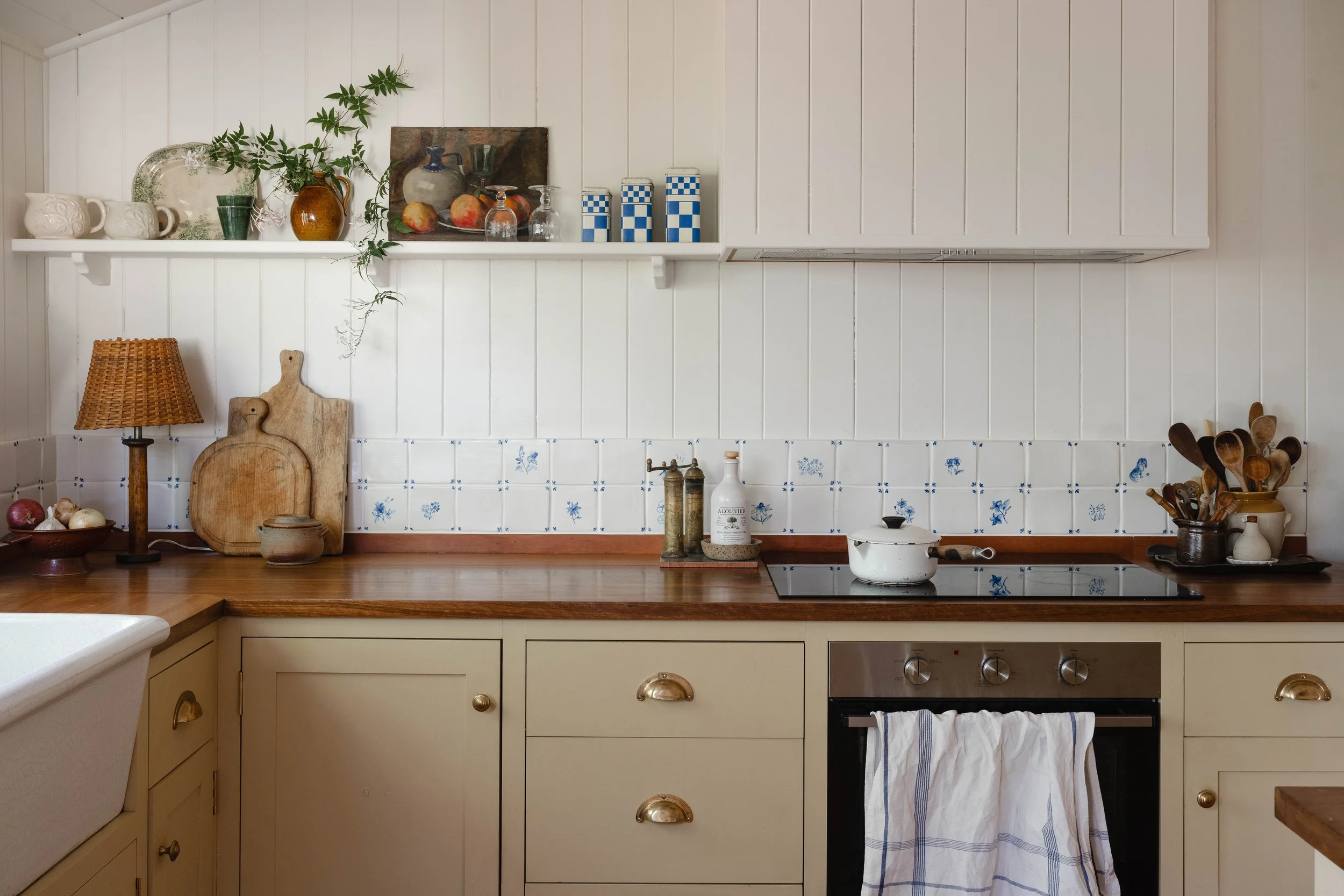
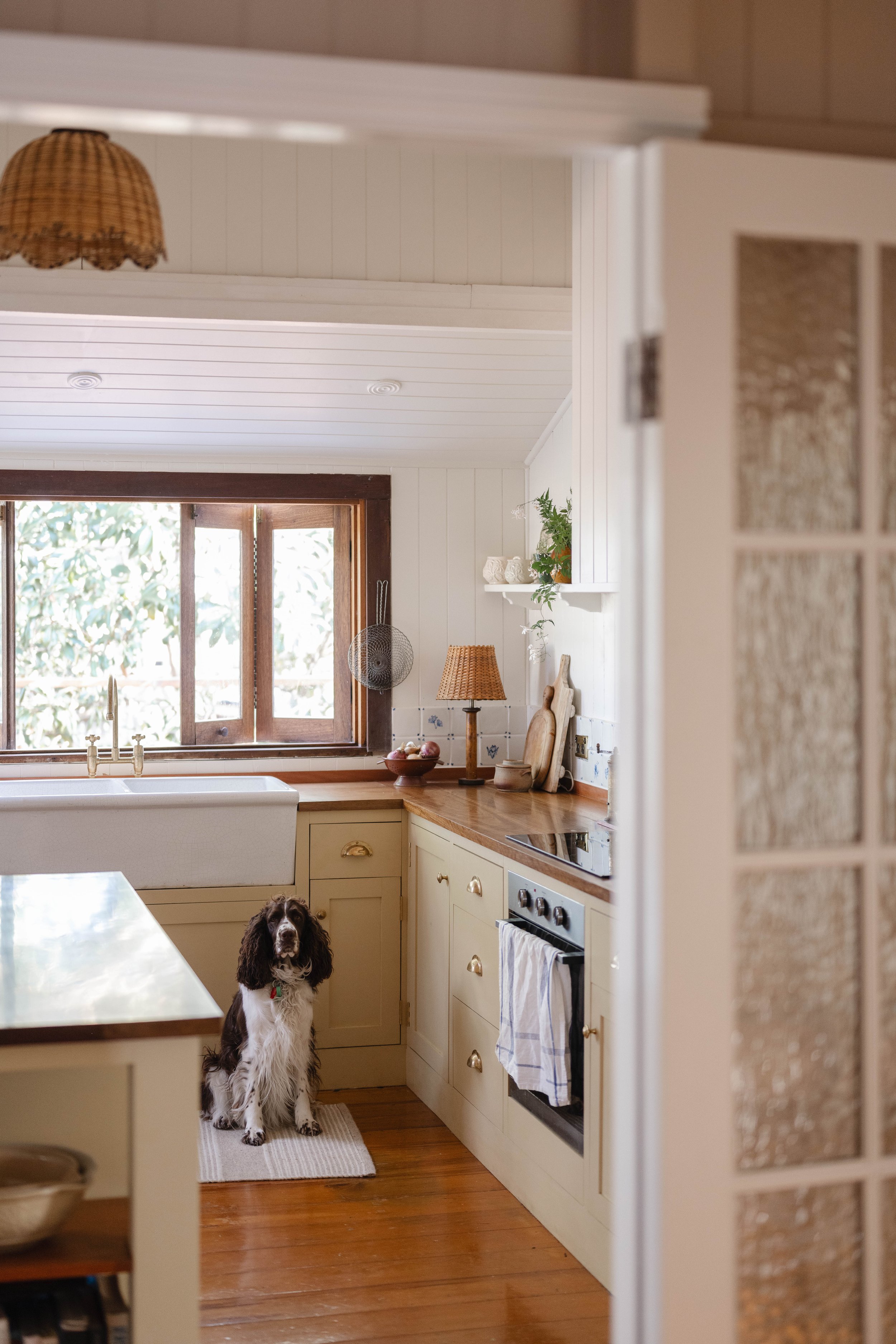
Our new kitchen is finally complete, and while it has more mod-cons than what would have originally been found in a home like this, I hope its cabinetry and simple hardware are a tribute to yesteryear.
I have been really fortunate to work on this kitchen with dear friends Pete and Maddison, who are talented creatives who understood my vision and were catalysts in bringing it to life.
A quick overview of the businesses that brought this kitchen to life
Sumo Furniture: all design, build and cabinetry
Day to Day at Home: handmade tiles and illustrations *gifted
Tradco: cabinetry hardware *gifted
The Brass Shop Magins: Bridge tap by CB Ideal
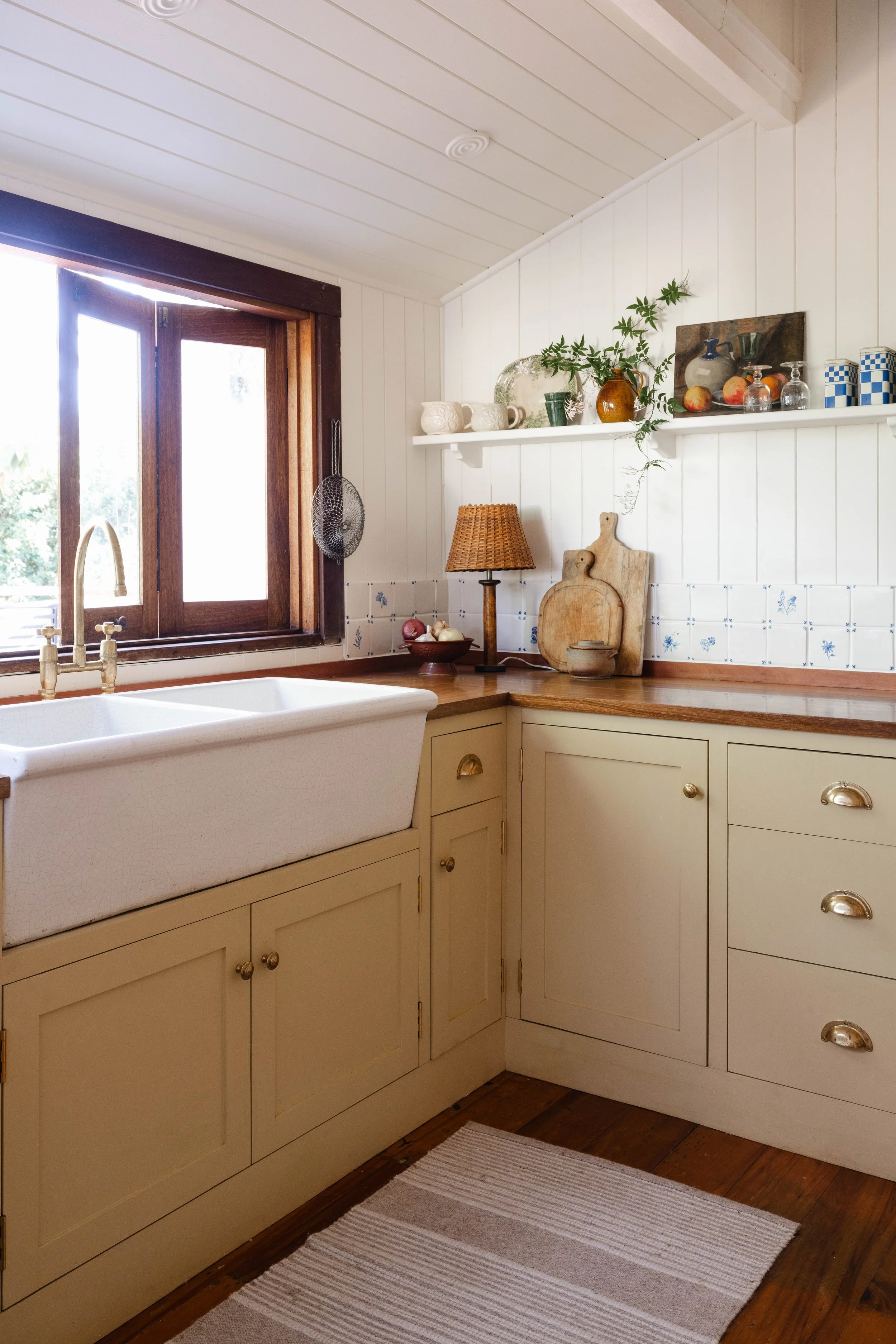
Cabinetry design and layout
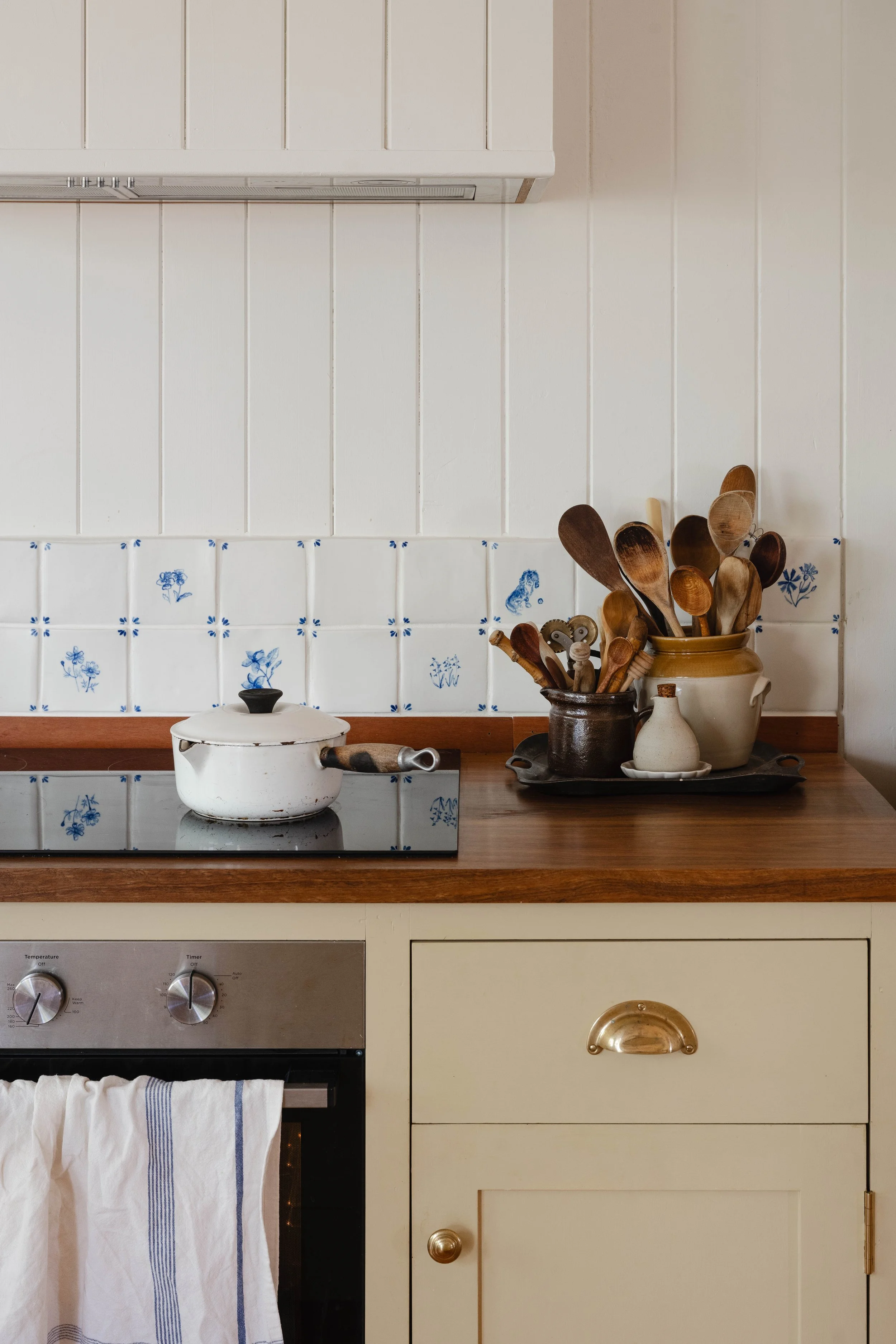
Working closely with our friend Pete, a cabinetmaker who had recently relocated to Australia, we designed a bespoke timber kitchen with English-style face-frame cabinetry in butter yellow.
The creative brief was to build a kitchen that felt in keeping with the age of our 1930s Queenslander in Ipswich, with special storytelling pieces that connected us to the home.
I particularly love British and Welsh cottage-style homes, so I predominantly sourced inspiration images from that part of the world for my moodboard.
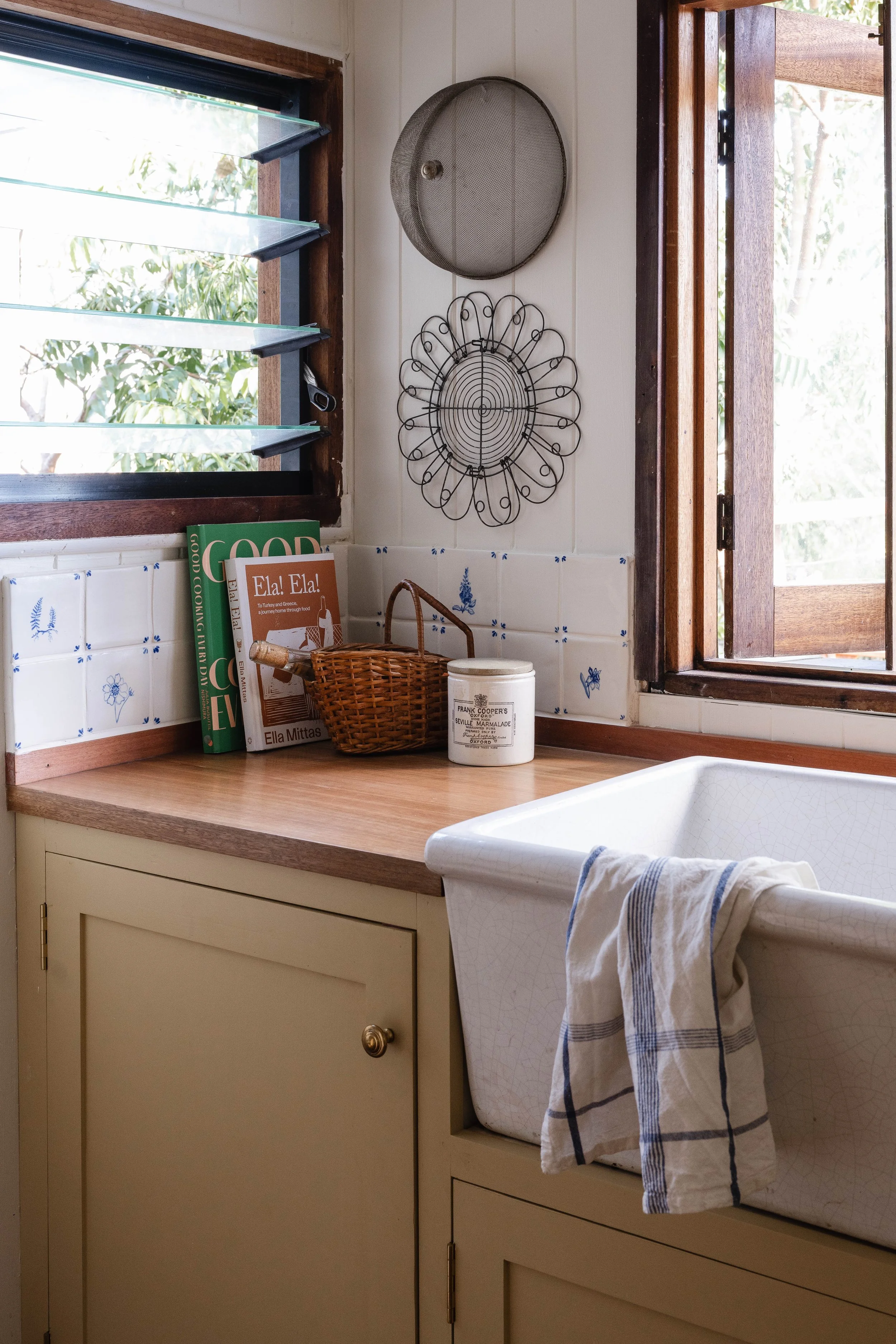
A non-negotiable piece was a porcelain butler’s sink, though more specifically I wanted to find one made by Dinmore Pottery, which was a prominent ceramic manufacturer here in Ipswich in the early 1900s. I had just about given up finding one when Pete searched “flower pot” on Facebook Marketplace and came home with our Dinmore tub for just $40.
To lower costs and for logistical purposes, we kept the floor/appliance layout of the kitchen the same as before. I would have loved a freestanding turned timber island bench, howver ours hides our dishwasher and to avoid polishing floorboards Pete scribed the new bench to the same dimensions. We also kept the appliances that we had since they were in good working order and as another cost-saving measure.
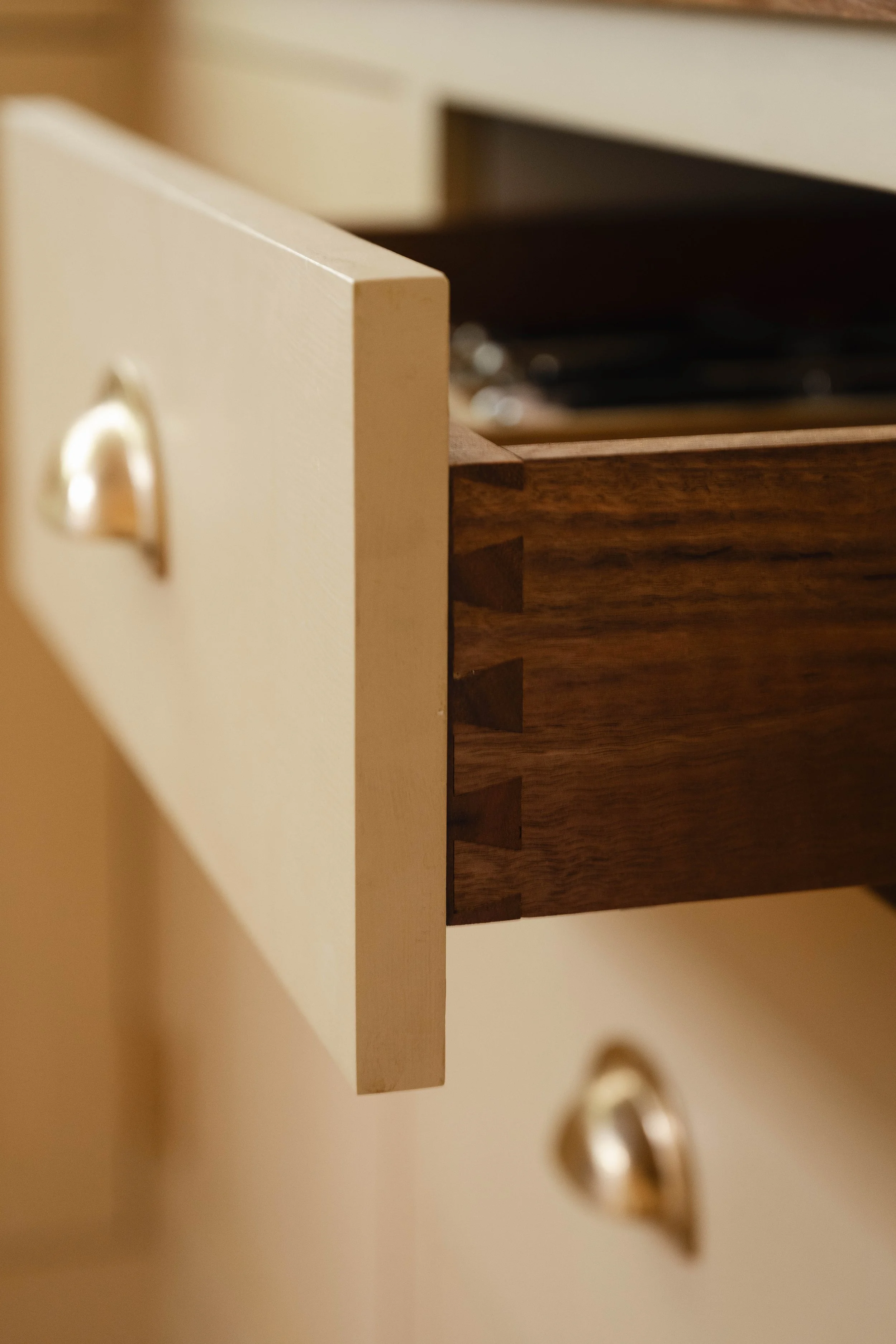
The hand-painted cabinet fronts and drawers are cut from Tasmanian oak, drawers are lovingly dovetail-joined, and the benchtops are smoothed spotted gum from Bundjalung country.
This kitchen truly would not have been possible without Pete who is responsible for taking the initiative on a lot of the detailed design suh as dove-tail joins and sourcing the beautiful timber for the counter. It was such a joy to collaborate with him on many steps of the process.
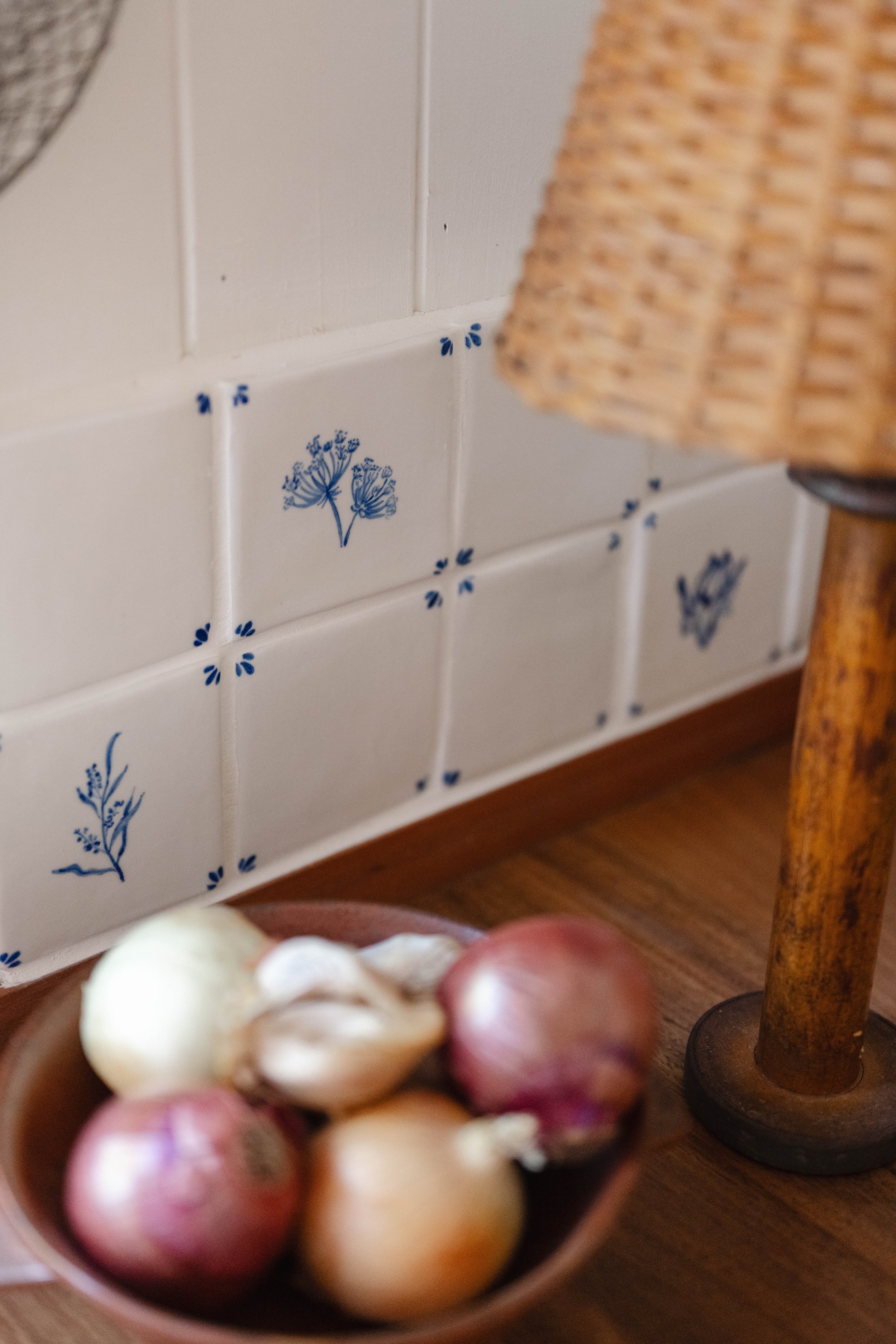
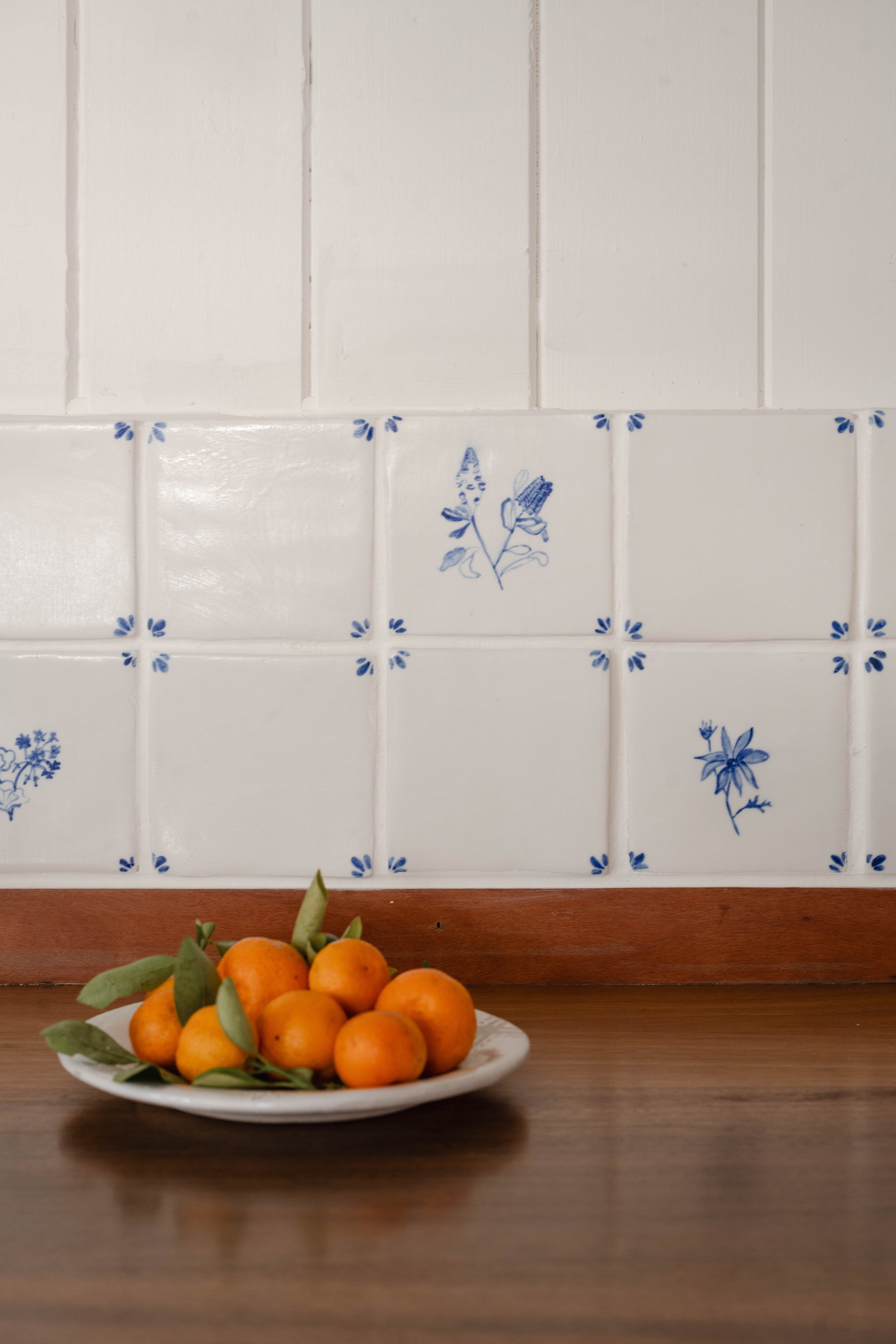
Handmade and illustrated tiles
Maddison od Day to Day at Home, a very talented ceramicist and illustrator friend of mine, kindly agreed to make tiles for the kitchen, despite never having made some before! Delft tiles have certainly been trending lately, but I adore how personalisable they can be.
We pulled together a list of flowers to feature on the tiles, many of which have a special meaning for me. A frangipani for an old friend, flannel flowers for my mother and sister-in-law, pansies for my lifelong bestie. Maddison also painted two tiles for my current dog Marmalade and our last spaniel, Arthur.
Additional sources
Vintage Dinmore porcelain sink sourced via marketplace
Cabinetry colour: “Hay” by Farrow and Ball, colour matched by Dulux
Wall colour: Stowe White by Dulux
Countertop timber: Spotted Gum sourced from Bundjalung country
Unlacquered brass knobs, drawer pulls, hinges and powerpoints: Tradco
French still life on shelf: French Art Muse
Tea towel: French country collections via Ruben & Flax, Tenterfield
French board and butter crock: My French Finds
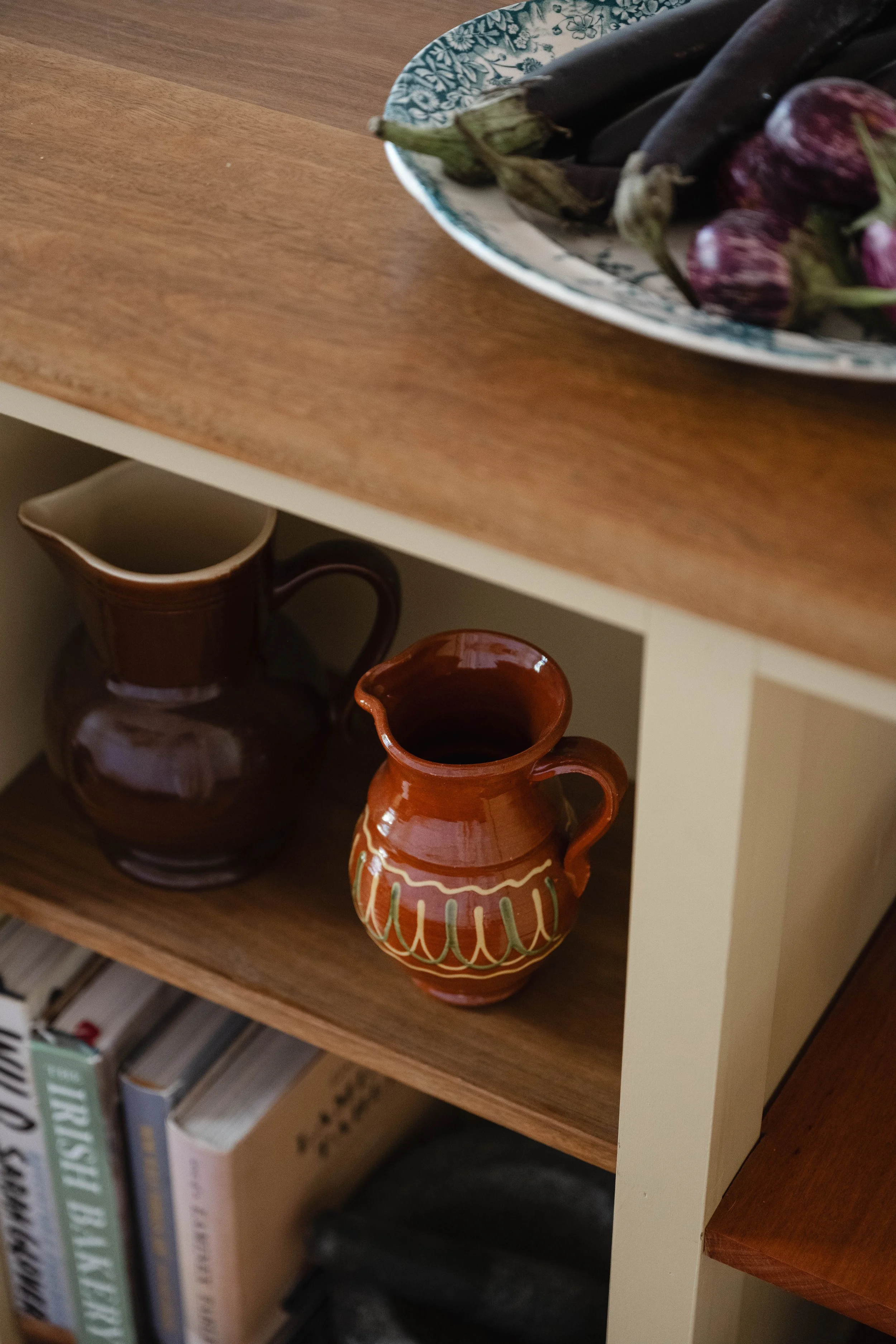
All other homewares are secondhand found through years of collecting